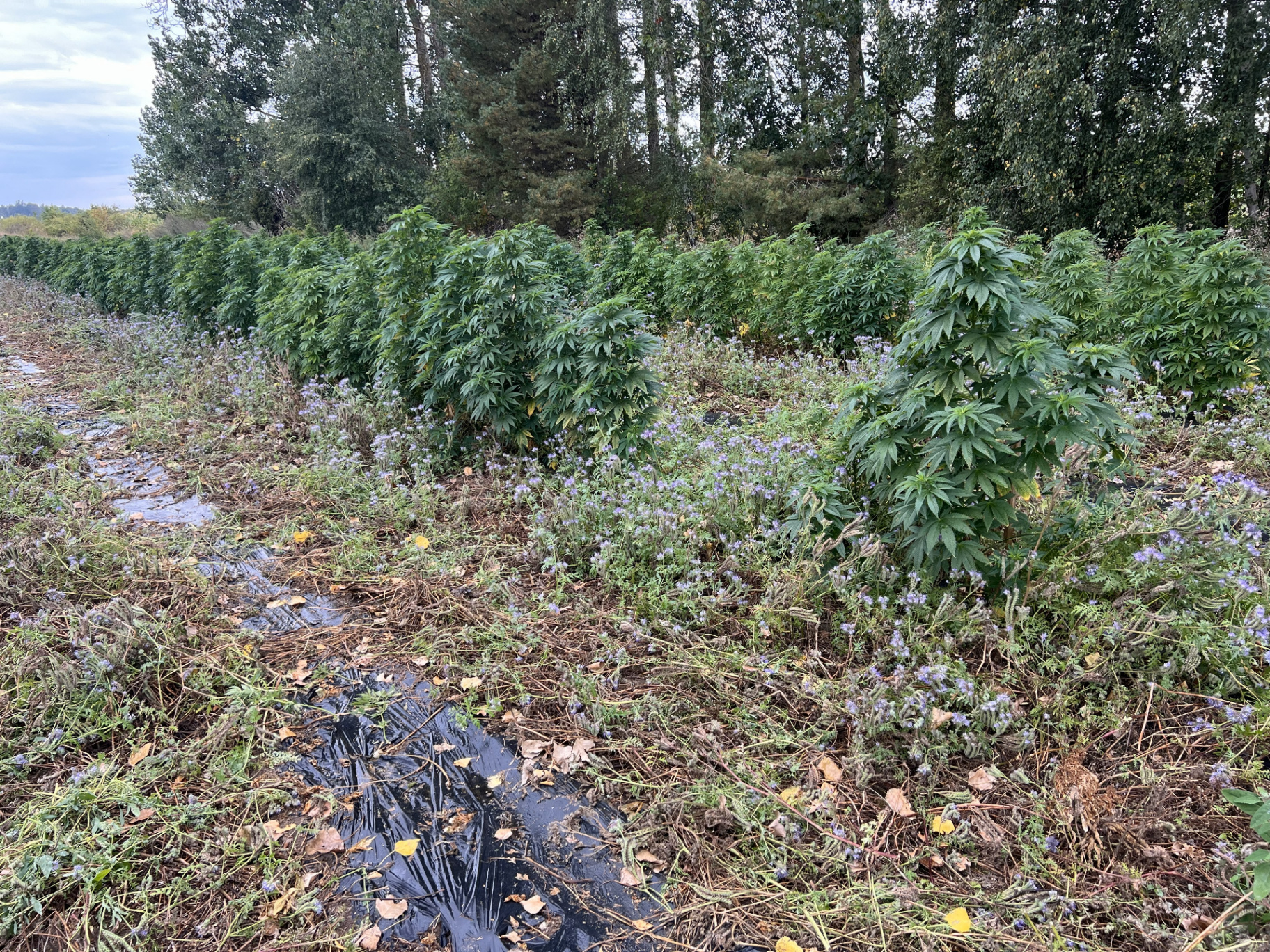
In the spring of 1998, researchers began planting industrial hemp at contaminated sites across post-Soviet Europe. The goal was not to harvest a crop. The goal was to remove cadmium, lead, nickel, and radioactive caesium that had accumulated in the soil after decades of industrial activity and nuclear fallout. Hemp was chosen for a simple reason: it is extraordinarily efficient at pulling what is in the ground up into its tissue.
That same quality, the reason hemp has been planted near Chernobyl, studied at contaminated industrial sites in Italy and Germany, and explored as a bioremediation tool on four continents, is also the reason the question of where your hemp was grown matters more than almost anything else on the label.
This article covers what the science actually says. Not the simplified version. The full picture, including the nuances that are rarely discussed.
Hemp as a Soil-Cleaning Machine
Phytoremediation is the use of living plants to extract, degrade, or immobilise contaminants in soil and water. Hemp (Cannabis sativa L.) is among the most studied phytoremediators in the world. Its deep taproot system, roots reaching 45 to 90 centimetres, compared to the shallow roots of most metal-accumulating plants, and its rapid biomass accumulation allow it to pull heavy metals and radionuclides out of contaminated ground with high efficiency.
A comprehensive 2022 review published in the journal Plants documented the scale of hemp's accumulation capacity with precise measurements: zinc concentrations up to 5,029 mg/kg in roots, copper up to 1,530 mg/kg, cadmium up to 1,362 mg/kg. These are not trace amounts. They reflect an active biological mechanism, not passive absorption.
Hemp's transport pathways pull calcium, potassium, and phosphorus from soil to feed rapid growth. The same pathways cannot distinguish between these nutrients and their chemically similar analogues. Caesium-137 mimics potassium. Strontium-90 mimics calcium. Both get absorbed alongside the nutrients the plant actually needs.
This is not a flaw. In phytoremediation projects, it is the whole point. The contaminated biomass is harvested, treated as low-level radioactive waste, and the soil is measurably cleaner. Repeat over multiple seasons and you have a biological decontamination programme at a fraction of the cost of mechanical soil removal.
The problem only arises when the same plant is grown for human consumption.
Chernobyl and the Evidence Base
The Chernobyl disaster of 26 April 1986 released an estimated 400 times more radiation than the Hiroshima bomb across a broad swath of Europe. The exclusion zone around the reactor covered 2,600 square kilometres. But wind patterns carried significant contamination across Belarus, Russia, Scandinavia, Poland, and central Europe. Sweden recorded some of the highest fallout outside the Soviet Union.
From 1998, hemp plantations were established in the Chernobyl exclusion zone specifically to test soil decontamination. The results confirmed that hemp could absorb caesium and strontium from contaminated soil into its biomass. Reports from Ukrainian and Italian researchers noted that hemp tolerates the uptake of contaminants better than most species and can grow vigorously on soils where food crops cannot be established at all.
Field trials followed in Germany, where hemp successfully removed lead, cadmium, and nickel from sewage-contaminated agricultural land, and in Italy, where industrial hemp has been used since the mid-2010s at the Ilva steel site in Taranto, one of Europe's most heavily polluted industrial areas, to clean soil contaminated by decades of steel mill emissions.
The lesson for consumers is the same in every case: hemp grown for phytoremediation absorbs what was in the soil. That biomass cannot enter the food chain. It is handled as hazardous waste.
What the Transfer Factor Data Actually Shows
A peer-reviewed radioecology study published in the Journal of Environmental Radioactivity , one of the most cited papers specifically on hemp and radionuclides, measured the soil-to-plant transfer factors for radiocaesium in hemp and flax under controlled conditions.
The results were nuanced. Hemp's transfer factor for caesium-137 to stem was approximately 0.6×10⁻³ m²/kg. To separated fibres, approximately 1.0×10⁻³ m²/kg. These numbers are low, meaning hemp absorbs only a small fraction of the total radioactivity present in soil, not a large one. Most of the radioactivity stays in the ground.
Seeds came in lower than the structural parts of the plant. Vandenhove et al. report transfer factors to flax stems of 1.34–2.80×10⁻³ m²/kg and state that the factors for seed are roughly four times lower. For radiocaesium, then, the seed accumulates less per unit weight than stem and fibre, the edible part is the one that takes up the least.
The same study also found reason for some reassurance: the transfer factors for fibre and straw were low enough that clean end-products, including fibre, seed oil, and biofuel, could theoretically be produced even on moderately contaminated land, provided contamination levels stayed below defined regulatory thresholds. For hemp fibre, the safe threshold is below 740 kBq/m² of surface soil activity. Because seed sits lowest of all the plant parts, it is stem and fibre, not seed, that set the limit in such calculations.
The distinction between heavy metals and radionuclides also matters here. The 2022 Plants review noted that hemp seeds show minimal uptake of heavy metals compared to roots and leaves. The picture is the same for radiocaesium: seed sits lowest of the plant parts. Beyond that, radionuclides and heavy metals follow different uptake pathways in plant tissue.
The Warsaw Study: What the Protective Effect Actually Means
In 2024, researchers at the Institute of Nuclear Chemistry and Technology in Warsaw published a study in Nukleonika , the peer-reviewed journal of nuclear research, titled "Radiolysis of composite polypropylene/hemp fibers." The research team, led by Wojciech Głuszewski, investigated how ionising radiation affects the properties of polypropylene composites containing different concentrations of hemp fibres.
The study found a clear protective effect. Aromatic compounds in industrial hemp fibres, primarily lignin and cannabidiol, which together make up approximately 6% of hemp fibre by weight, absorb energy from ionising radiation through their ring structures and dissipate it before it can initiate chain degradation in the surrounding polymer matrix. Even 10% hemp fibre content reduced hydrogen evolution yields during irradiation by 22%, a significant decrease relative to the small proportion of aromatic compounds involved.
Since the protective effect is driven by lignin and cannabidiol, this means that industrial hemp varieties with naturally higher concentrations of these compounds would provide an even stronger protective effect against radiation-induced degradation. Cultivar selection thus becomes a variable that directly influences the radiation tolerance of the composite material.
This protective effect was consistent across both gamma radiation and electron beam irradiation, and was confirmed through gas chromatography, melt flow rate analysis, and mechanical property testing.
The practical application of this research is for biodegradable polymer composites, packaging materials, medical device components, automotive parts, where controlled degradation timelines matter. By varying hemp fibre content and irradiation conditions, manufacturers can tune how quickly a composite breaks down in the environment.
This is a genuinely important finding. But precision matters when applying it to consumer products. The protective effect means that hemp-containing composites degrade more slowly under radiation than pure polypropylene. It does not mean that hemp blocks ionising radiation. It does not mean that hemp absorbed by the human body provides any protective effect against radiation exposure. And it does not mean that hemp grown in contaminated soil is safe to consume because of its aromatic chemistry.
A separate 2024 study in Materials Letters explored hemp fibre composites coated with nickel-phosphorus for electromagnetic interference shielding, achieving approximately 90 dB of shielding effectiveness at radiofrequency wavelengths. This is another area of legitimate materials research. But electromagnetic shielding of radiofrequency signals is a different phenomenon entirely from attenuating ionising radiation such as gamma rays or X-rays.
Pure hemp, without heavy metal additives, is essentially transparent to gamma radiation. Its low density and low atomic number mean that plant fibre alone offers negligible shielding against high-energy photons.
What This Means for Hemp Food Products
When you consume hemp seed powder, hemp oil, hemp protein, or any hemp-derived supplement, you are consuming a concentrated product. The manufacturing process that concentrates the beneficial compounds also concentrates whatever else was in the plant. A CBD extract that requires kilograms of raw plant material will proportionally concentrate any contaminants present in that raw material.
Given the seed transfer factor data, this deserves particular attention for hemp products made from seeds or whole plant material grown in regions with elevated soil radioactivity or heavy metal loads.
Why Gotland Soil Is Different
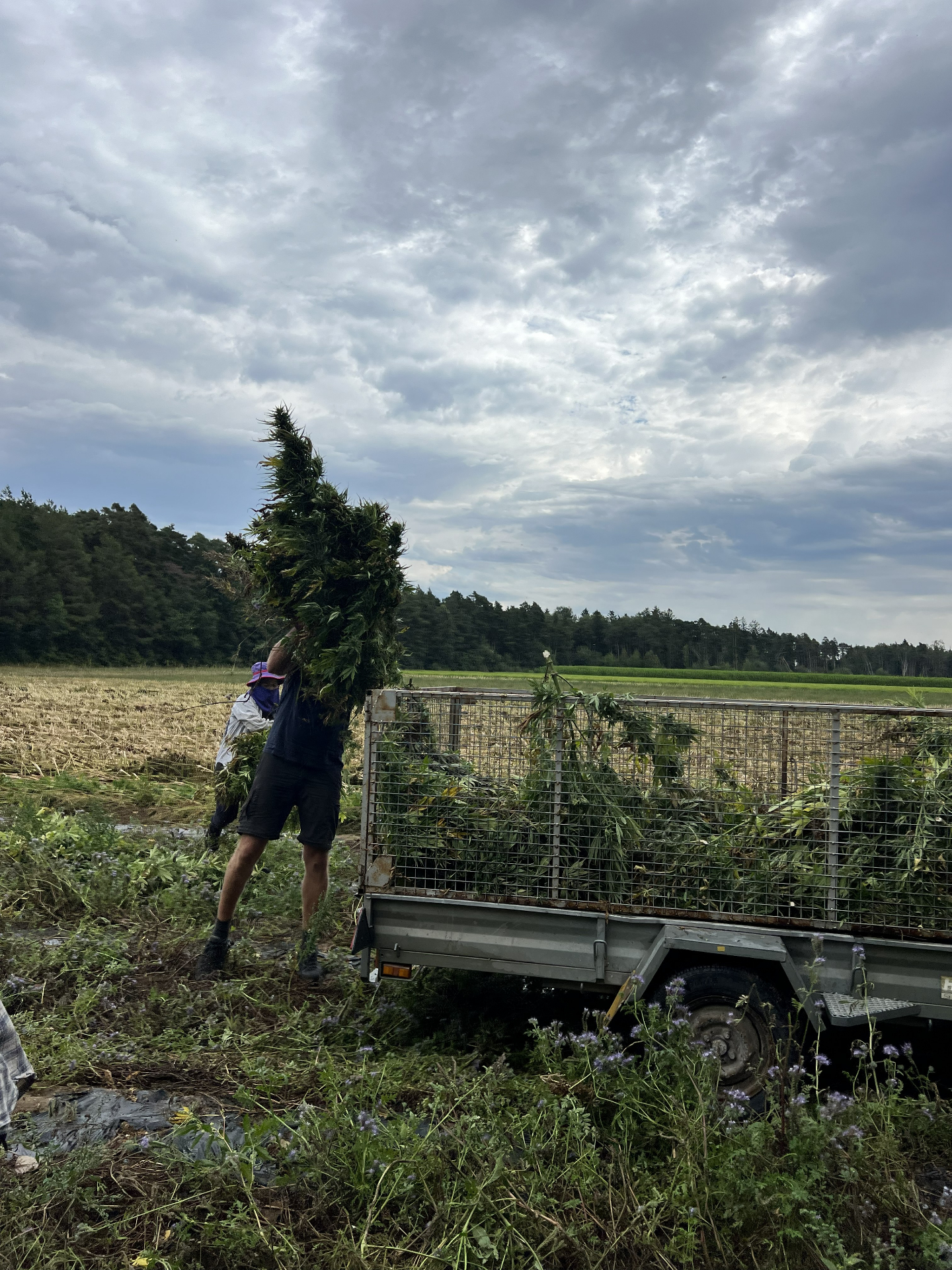
Sweden's island of Gotland occupies a specific position in the Baltic Sea, 90 kilometres east of the Swedish mainland. Its bedrock is Silurian limestone, calcareous, alkaline, and chemically different from the granitic soils of mainland Scandinavia in ways that matter directly for contaminant dynamics.
First: alkaline soils immobilise heavy metals. The bioavailability of cadmium, lead, and zinc, their ability to move from soil particles into plant roots, is strongly pH-dependent. Below pH 6, these metals become mobile and plant-available. Above pH 7, they bind tightly to mineral surfaces and organic matter. Gotland's limestone soils are naturally alkaline, reducing the risk of heavy metal accumulation in crops even where trace concentrations are present.
Second: land use on Gotland is dominated by agriculture, limestone quarrying, and fishing. The island is not industry-free, however, cement production at Slite has been running since 1917, and the Swedish Land and Environment Court (mark- och miljödomstolen) has ordered the operator to investigate contamination in Bogeviken bay, where elevated metal levels have been measured in the bottom sediment. What holds for any individual field is therefore settled by that field's own laboratory values, not by the island's reputation.
Read our full guide to what makes Helsama hemp premium and how every batch is tested: Helsama's premium CBD from Gotland
The Honest Bottom Line
Hemp is a remarkable plant. Its phytoremediation capacity is a genuine environmental asset and an active area of serious scientific research. The protective effect of its aromatic compounds under ionising radiation, documented by Głuszewski and colleagues at the Institute of Nuclear Chemistry and Technology, is a real phenomenon with practical implications for materials engineering. Its nutritional profile and cannabinoid content are well-supported by evidence.
None of that changes the fundamental dynamic for consumers: hemp absorbs what is in its environment, and delivers it to you. The same biological efficiency that makes it useful for soil decontamination makes the soil it grows in the single most important quality variable in the supply chain.
Buy from producers who can tell you exactly where their hemp was grown, what the soil baseline looks like, and what an independent laboratory found in the finished product. If those three things cannot be answered clearly, that gap is itself an answer.
Origin is not a premium feature. It is a safety standard.
Sources
- Głuszewski, W., Lewandowska, H., Malinowski, R. & Krasinska, O. (2024). "Radiolysis of composite polypropylene/hemp fibers." Nukleonika, 69(2), 45–51.,doi: 10.2478/nuka-2024-0007
- Vandenhove, H. et al. (2005). "Fibre crops as alternative land use for radioactively contaminated arable land." Journal of Environmental Radioactivity, 81(2–3), 131–141.,ScienceDirect
- Placido, D.F. & Lee, C.C. (2022). "Potential of Industrial Hemp for Phytoremediation of Heavy Metals." Plants, 11(5), 595.,MDPI
- Enhancement of electromagnetic interference shielding properties of hemp fiber sandwiched carbon fiber composites using electroless NiP coating. Materials Letters (2024).,ScienceDirect
- National Hemp Association, Hemp and the Decontamination of Radioactive Soil., nationalhempassociation.org
- Signature Products, Hemp Soil Decontamination., signature-products.com