In 2013, three researchers from Uppsala University, the Swedish History Museum and the University of Bergen published an article in Scientific Reports (Nature Publishing Group) that was almost entirely ignored by the Swedish daily press. The result should have raised eyebrows across an entire nation.
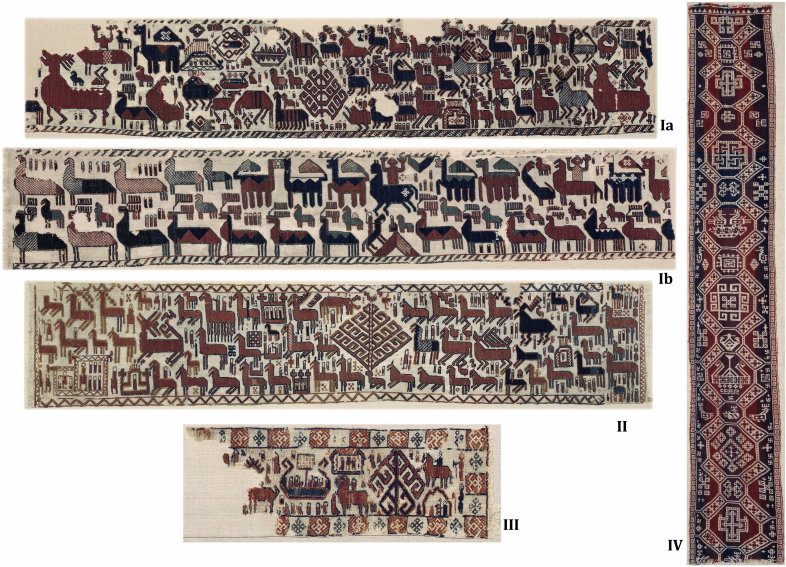
Of ten carefully examined Viking-age and early medieval Scandinavian textiles, radiocarbon-dated between 780 and 1420 AD, four contained hemp fibres. Among them were the Överhogdal tapestries, often called "Sweden's Bayeux Tapestry" and one of the oldest preserved figurative weavings in Northern Europe.
One of Sweden's proudest cultural treasures is therefore woven from hemp.
What are the Överhogdal tapestries?
The Överhogdal tapestries, five pieces of cloth discovered in 1909 by Jonas Holm during a renovation of the church of Överhogdal in Härjedalen, are considered one of the oldest preserved figurative pictorial weavings in Northern Europe. They depict hunting scenes, deities, mythological animals and scenes most often interpreted today as depictions of Ragnarök (the interpretation remains contested). Today, due to their fragility, they are displayed in climate-controlled cases at Ahlbergshallen in Östersund, part of the Jamtli museum.
They are radiocarbon-dated to 800–1170 AD across two separate analyses (1991 and 2005), woven at the height of the Viking era, while Scandinavians were sailing to Constantinople, colonising Iceland and establishing Hedeby as one of Northern Europe's largest trading cities.
Until 2013, these weavings were assumed to be made of linen or wool. That seemed natural, hemp, in the prevailing belief, was a coarse fibre used for ropes and sacks, not finer textiles.
That belief turned out to be wrong.
What the researchers actually found
The study, led by textile historian Gunilla Skoglund together with Margareta Nockert (Swedish History Museum) and Professor Bodil Holst (University of Bergen), used a combination of optical microscopy, scanning electron microscopy (SEM) and chemical analysis to identify fibre types. The method is reproducible and published in detail in Scientific Reports.
The conclusion was unambiguous: four of ten textiles contained hemp, three blended with linen, one of pure hemp. This was a sample of randomly selected preserved Viking-age textiles. Extrapolated to the whole of Scandinavian textile production during the Viking era, this means hemp was likely an everyday, and often deliberately chosen, raw material.
The most important finding may not have been quantitative but qualitative. The researchers noted that the hemp fibres in these weavings were "almost as fine as linen". The Vikings did not choose hemp because it was a cheap coarse fibre. They chose it because it produced durable, fine and weather-resistant fabrics.
Hemp in the Nordics before Odin
Hemp is even older in Scandinavia than the Viking era. Pollen analyses from the sediment layers of the Oslo fjord show "considerably more hemp pollen than flax pollen" already during the period 350 BC to 450 AD, the era of the Roman Empire and the Iron Age, before the North even had a written language.
This is reported in the Skoglund study with reference to earlier work by botanist Knut Fægri and colleagues, whose pollen mappings of southern Norway form the standard within Nordic palaeobotany.
In other words: when Caesar crossed the Rubicon, hemp was being grown along the Norwegian and Swedish coasts. When Christianity came to the North, hemp was grown. When Gustav Vasa was crowned in 1523, two thousand years later, hemp was still being grown, now on a documented industrial scale.
Gotland and the Hanseatic League: the hub, not the field
In the Middle Ages, Gotland became one of the Baltic Sea's most important trading hubs, and Visby one of the Hanseatic League's early principal towns. The island's strength was its position. A study of Gotland's standing in the Hanse describes the island as a critical node for the trade that passed through the Baltic from places as far apart as Russia, Germany and England. The goods named in that trade are furs and timber.
Hemp is not among them, and that is worth pausing on, because the opposite is often claimed. Baltic hemp did rig Europe's fleets, but it did not come from here. Between 1767 and 1782, Russia supplied 95.9 per cent of Britain's hemp imports, averaging 18,392 tons a year, shipped via St Petersburg and Riga. Gotland was the harbour the ships passed, not the field the rope grew in.
What the island did share with the rest of Scandinavia was cultivation for domestic use. Hemp was grown and retted in southern Sweden as early as the Roman Iron Age, the earliest robust evidence for hemp retting in Scandinavia, and the practice continued through the Viking Age and the Middle Ages. Rope, sacks, bedding, sailcloth. Household need, not export commodity.
The forgetting: three forces over 150 years
How could a 2000-year-old Nordic tradition disappear so completely that most Swedes today perceive hemp as "new", "American" or "radical"?
Three parallel forces dismantled the Nordic hemp economy between roughly 1840 and 1960.
1. Industrial cotton (1830–1900)
The industrialisation of cotton production in Manchester and New England created prices that flax and hemp growers could not match. American cotton was, moreover, a product of slavery, a cost structure no European farmer could compete with. Swedish flax production collapsed in the 1870s. Swedish hemp cultivation followed.
2. Synthetic fibre (1935–1960)
When DuPont chemist Wallace Carothers synthesised nylon in 1935 (patent granted 1938) and polyester processes were developed during the 1940s, the textile market changed forever. A large share of the world's modern clothing today is made of petrochemical products, meaning the same oil industry that dominates the fuel market also dominates the clothing industry.
3. The 1937 global prohibition
The United States passed the Marihuana Tax Act in August 1937, which in practice banned all hemp production, industrial hemp and the psychoactive variant were treated as identical. Under pressure from the US, international agreements followed and most Western countries introduced similar restrictions during the 1950s–60s. Sweden regulated cannabis cultivation through the 1968 Narcotic Drugs Act, which did not distinguish between THC-rich and THC-free varieties. Industrial hemp thereby became unlawful in Sweden for several decades.
The EU has regulated industrial hemp since the 1970s (Council Regulation 1164/89 set the limit at 0.3% THC in 1989, lowered it to 0.2% in 2000, and raised it back to 0.3% from 2023). When Sweden joined the EU in 1995 and re-legalised industrial hemp, Sweden's tradition had already been broken for three generations. The practical craft, how to ret, break, hackle and spin hemp, survived only in museums.
What we paid for the forgetting
The cost of abandoning Nordic hemp and replacing it with cotton plus polyester became gradually visible in the late 20th century.
Microplastic in the oceans. The IUCN report Primary Microplastics in the Oceans (2017) showed that approximately 35 per cent of all microplastic in the world's oceans comes from the washing of synthetic fabric. Every time a polyester shirt is washed, it releases hundreds of thousands of microfibres that end up in the oceans, and in our stomachs.
Cotton's water consumption. According to WWF's water footprint analyses, around 2,700 litres of water are required to produce a single cotton T-shirt. The Aral Sea, once the world's fourth-largest inland lake, lost over 90 per cent of its volume during the second half of the 20th century, largely through irrigation of Soviet cotton fields in Uzbekistan and Kazakhstan.
Pesticides. Cotton is grown on around 2.4 per cent of the world's arable land but accounts for around 16 per cent of the world's insecticide use and six per cent of pesticides overall (ICAC/WWF). Hemp essentially needs no chemical pesticides to yield a crop.
Shipping and carbon dioxide. A typical cotton T-shirt has travelled thousands of kilometres before it hangs in the store. The same garment in Swedish-grown hemp would have travelled only a fraction of that.
A craft thus went from being everyday to extinct in three generations. A raw material went from European trading infrastructure to "exotic".
Gotland, 2025
On Gotland we now process hemp again. We do not grow it ourselves; we process the harvest from Swedish industrial hemp farmers, the same legally regulated Cannabis sativa that the EU regulates as industrial hemp and which contains less than 0.3 per cent THC.
And it is not the first time the island has been the biggest. In the 1950s and 60s, hemp growing on Gotland was the largest in the country, with a hemp factory just outside Visby. The land suited it, the drained mires especially, and the harvests were larger than in France or Canada.
It is a small start. But it is not new. It is a reconnection.
The craft that the Vikings developed 1,200 years ago, that was household need in the North for over a thousand years, and that three combined industrial forces erased in less than a century, can be re-established. The knowledge exists in museums, in archaeological journals, in Scientific Reports from 2013. It is only waiting to be brought home.
Conclusion: tradition, not trend
When a Swedish politician says that hemp is "controversial" or "radical", it is worth remembering that the Överhogdal tapestries, which hang under glass in Östersund, are made from that plant. When a consumer rejects hemp believing it to be "new" or "alternative", they are turning down a raw material that produced the finest Nordic fabrics for a thousand years.
There are few things more Swedish than hemp.
That most of us do not know this is, in itself, the most remarkable thing about the whole story.