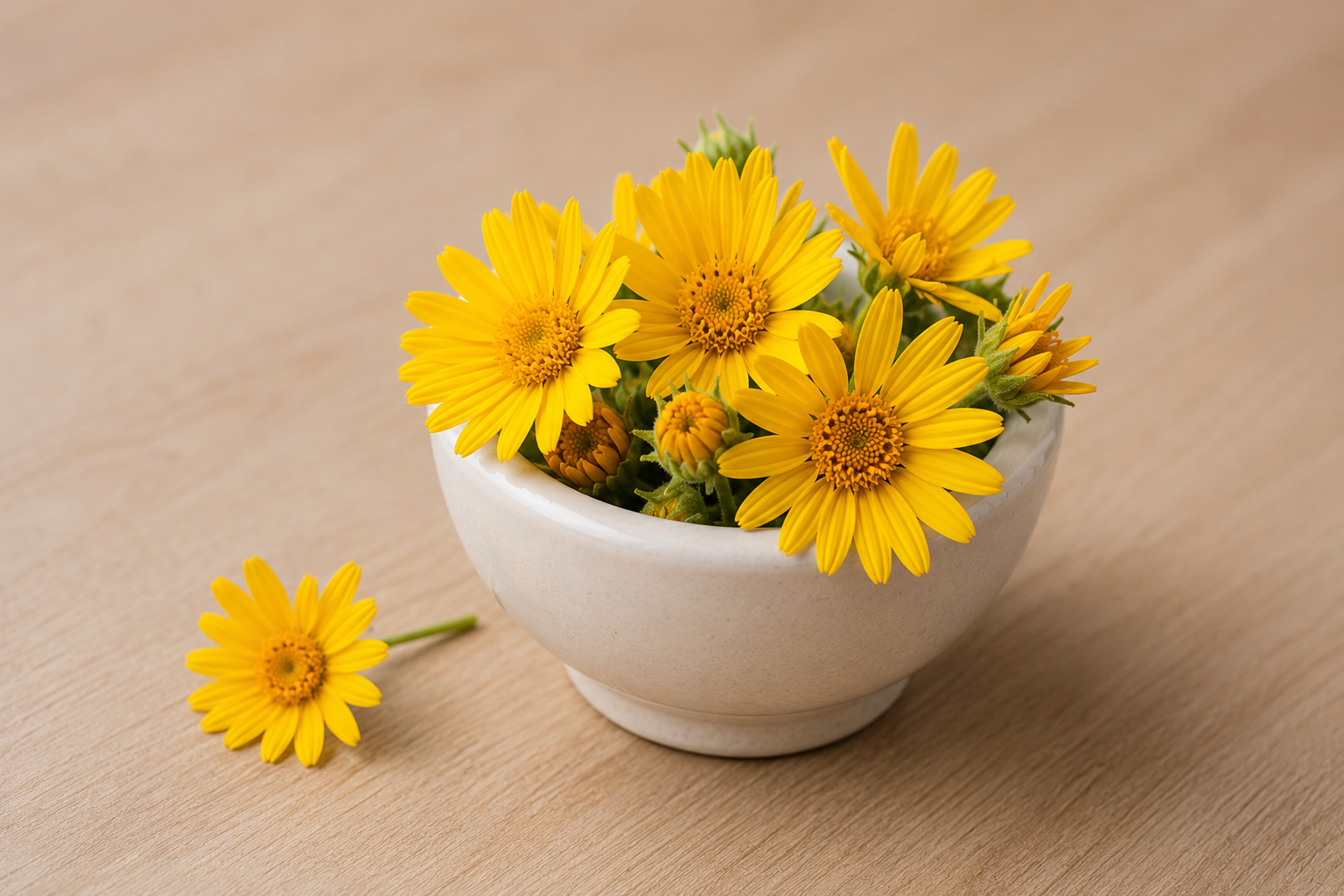
Short answer: Arnica (INCI: Arnica Montana) is a plant extract from a yellow-flowering mountain plant in the daisy family. In cosmetic products it appears as a caring botanical extract with a long tradition in European herbal culture. As with all cosmetic ingredients, we describe its role in how the skin feels and is cared for, not as a medical treatment.
What is arnica?
Arnica grows naturally in mountain meadows in Europe and has been used in folk herbal lore for centuries. The plant is protected in many places, so cosmetic arnica extract usually comes from cultivated sources. The daisy family (Asteraceae) also includes calendula and chamomile.
What role does arnica play in a formulation?
In a body or massage product, arnica extract contributes as part of a botanical complex. It is one of several traditional European plants chosen for a careful, natural composition. In our may not make medical claims. In a cream, arnica contributes as a caring botanical extract. If you have a medical need, talk to a pharmacy or healthcare professional.
Is arnica in skincare safe?
Yes, with normal cosmetic use on intact skin. Avoid damaged skin and be mindful if you have a daisy-family allergy.
What is arnica called on the INCI list?
Arnica Montana (Extract/Flower Extract). Latin names are used for all plant ingredients,