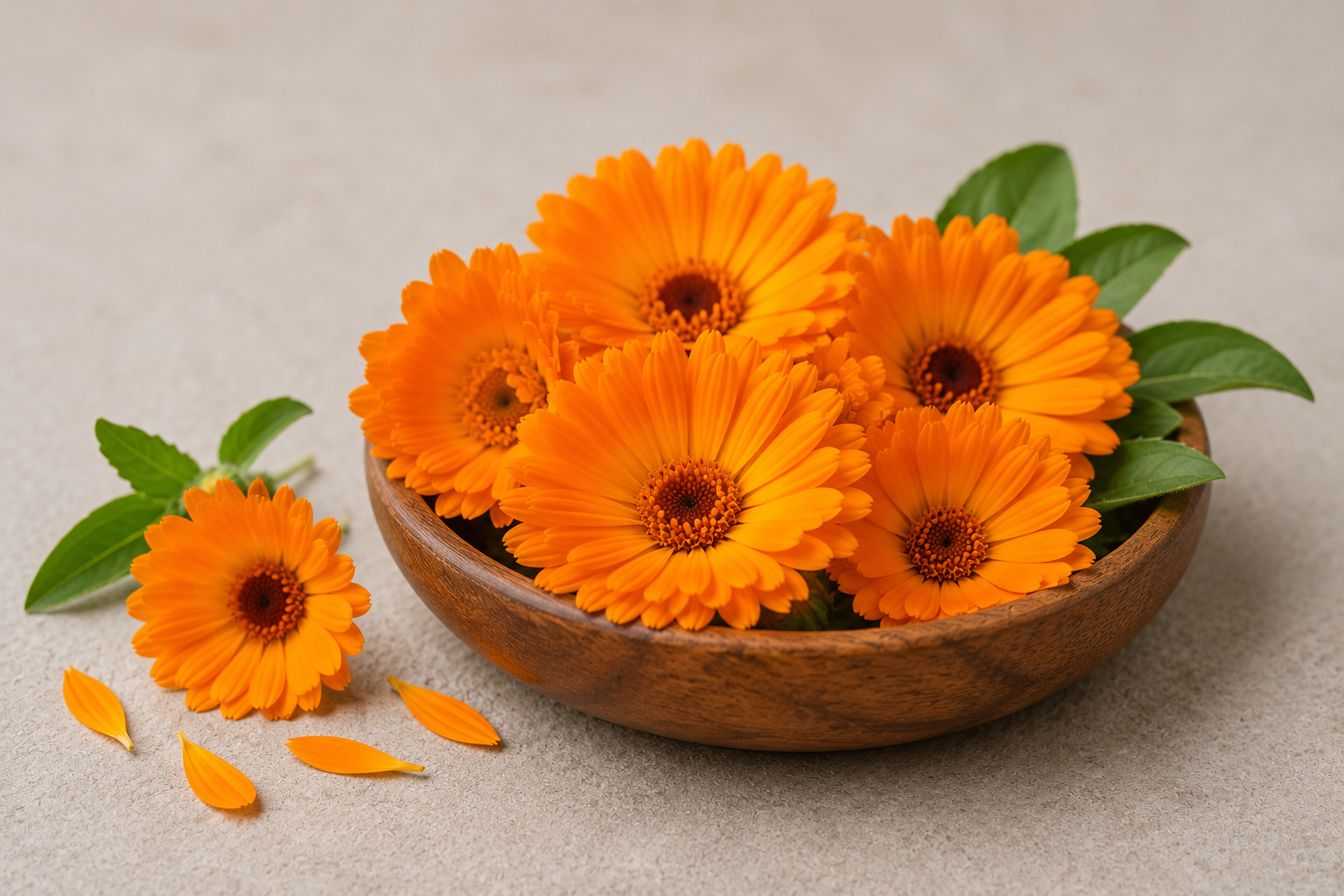
Short answer: Calendula (INCI: Calendula Officinalis) is the Latin name for marigold, an orange-yellow garden flower with a long tradition in skincare for sensitive skin. In cosmetics it is used as a caring botanical extract. We describe its role in how the skin feels and is cared for, not as a medical treatment.
What is calendula?
Marigold (Calendula officinalis) is grown throughout Europe and has been used in traditional herbal culture for centuries. It belongs to the daisy family (Asteraceae), like arnica and chamomile, and is usually extracted in oil or water for cosmetic use.
Calendula's role in a formulation
Calendula is often chosen for products for sensitive skin, where a mild and caring composition is the goal. In our hemp seed oil among others, in a gentle oil for delicate skin.
| Calendula (marigold) | |
|---|---|
| INCI | Calendula Officinalis |
| Family | Daisy family (Asteraceae) |
| Cosmetic role | Caring botanical extract, often for sensitive skin |
| Things to consider | Cross-allergy possible with a daisy-family allergy; test a small area |
Safety
- Calendula belongs to the daisy family, with a known allergy to e.g. arnica, oxeye daisy or mugwort, cross-reactions can occur.
- Test a small area of skin first if you have sensitive skin.
- Apply to intact, clean skin.
Frequently asked questions
Does calendula heal wounds?
Calendula has a long folk tradition, but a cosmetic product may not make medical claims such as wound healing. In a formulation it contributes as a caring botanical extract. If you have a medical need, turn to a pharmacy or healthcare professional.
Does calendula suit sensitive skin?
Marigold is often chosen precisely for products for sensitive skin. As always: test a small area first if you are prone to allergies.
Are calendula and marigold the same thing?
Yes. Calendula is the Latin name, marigold the English name. On the INCI it reads Calendula Officinalis.
Is calendula vegan?
The plant extract itself is plant-based. Check the product's full INCI for the other ingredients,