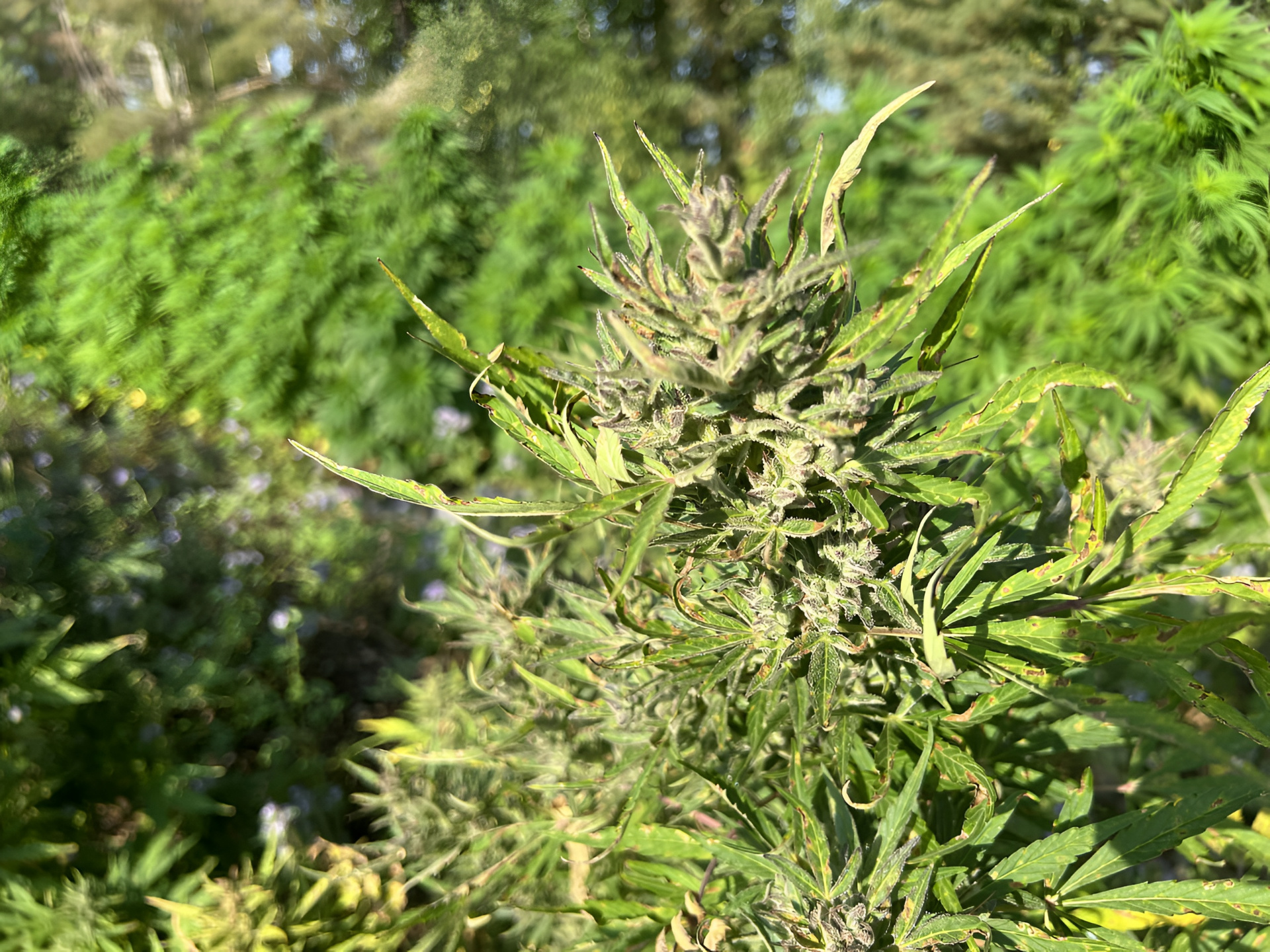
Why a 90-year-old advertising campaign still controls our energy, our agriculture and our wars.
The crop that started civilisation
There is a plant that may have started human civilisation. Archaeologists agree that cannabis was among the very first crops humans deliberately cultivated, 6,000 years ago, perhaps as far back as 12,000 years. Hemp is likely the first crop.
It grows faster than almost any other plant in temperate and colder climates, and thrives in the tropics too. Per hectare, hemp produces more energy, more oil, more protein and more fibre than almost any other crop, and it has more uses than most plants.
The often-quoted figure that one hectare of hemp replaces four hectares of forest in paper production is usually attributed to the USDA's Bulletin 404 of 1916. That conclusion is not in the bulletin; it is a later extrapolation, spread through Jack Herer's The Emperor Wears No Clothes. Thomas Jefferson wrote about hemp's role as a foundation of the American economy. For thousands of years, rope, sails, clothing, paper, food, oil and medicine all came from a single plant.
So what happened?
During the 1930s hemp was banned in country after country, in a period marked by racist drug propaganda. The usual link to the film Reefer Madness and to the petrochemical and timber industries does not hold up, however: the film dates from 1936, its producer did not contact the narcotics bureau until May 1938, after the Marihuana Tax Act had already passed, and Anslinger worked against its screenings. Hall (2026, Addiction) traces how that belief arose.
Consider what we lost:
Hemp can be refined into fuel, ethanol and biodiesel from cellulose and seed, that is renewable, cheap and in many tests more efficient than fossil petrol. In 1941 Henry Ford presented a car with a body of plant-fibre-reinforced plastic, filmed as he struck it with an axe. The Ford Museum calls it the Soybean Car and states that the recipe was not preserved; the man who built the panels reported soya fibre in phenolic resin. That the body was hemp fibre and the engine ran on hemp ethanol has no documented support. The car never reached the market.
At the same time, today's pharmaceuticals are largely built on petroleum-based raw materials, benzene, toluene and other fossil building blocks enter almost every tablet sold in Europe. The medicine humans used for millennia, plant-based, often with hemp as a base ingredient, was replaced by an industry as oil-dependent as the fuel market.
It was no coincidence that hemp disappeared. It was an economic rescue plan for a few industries, and we have lived with the consequences of that rescue plan ever since.
What the ban has actually cost
We live today in a world shaped by a decision we should never have allowed. Instead of a hemp-based industry we got:
- Oil dependence that drives half the world's geopolitics. Every time a war is fought over fossil resources, Ukraine, the Middle East, North Africa, it is a war a hemp economy would not have needed to fight.
- Massive oil spills, plastic islands in the oceans, toxic industrial waste.
- Clear-cut forests for paper pulp that hemp could have delivered more cheaply and more sustainably.
- An agriculture kidnapped by a few multinational companies that control seed, pesticides, distribution and politics.
- Climate crisis and the loss of entire ecosystems.
These are not coincidences. They are the logical result of replacing a renewable plant-based economy with a fossil-based one for almost a century. The civilisation that began with hemp was forced to abandon it, and we have all paid the price, every generation since.
Banning the most productive plant on earth is wrong
The phrasing is strong. It is also necessary. When a plant that yields food, oil and fibre from the same harvest is systematically kept out of our agriculture, so that corporations can profit from oil, plastic and industrial forestry, this is not a technical regulatory matter. It is a moral failure.
We have lost biological heritage. We have caused ecological crisis on a scale humanity has never seen. We are passing it on to our children, grandchildren and future generations as a bill they never asked for.
Helsama and Gotland as the start of a restoration
That is why Helsama exists. We refine hemp from Gotland, on land that remembers medieval hemp fields, in a climate that was demonstrably as suitable for hemp a thousand years ago as it is today.
It is a small start. But the principle is large: when we bring hemp back into Swedish food culture, Swedish agricultural policy and Swedish industrial fibre, we shift control back from the fossil corporations to the farmer. And every small share that shifts increases the likelihood that the next generation inherits a planet where the decision of the 1930s is finally undone.
Restore hemp. Not as a counter-movement against something modern, but as a correction of a historical wrong. The plant that started civilisation has a rightful place in agriculture. We are taking it back.
Sources
- U.S. Department of Agriculture, Bulletin No. 404, "Hemp Hurds as Paper-Making Material", Washington D.C., 14 October 1916
- The Thomas Jefferson Papers, 1606–1827, Library of Congress
- Jack Herer, The Emperor Wears No Clothes (1985), influential but contested on source-critical grounds; several of its most widely repeated claims cannot be verified against the primary sources
- Henry Ford's "Soybean Car", Popular Mechanics, December 1941; Ford Motor Company Archives, demonstration film 1941
- Reefer Madness (Louis J. Gasnier, 1936), frequently and wrongly presented as the driver behind the Marihuana Tax Act (1937)