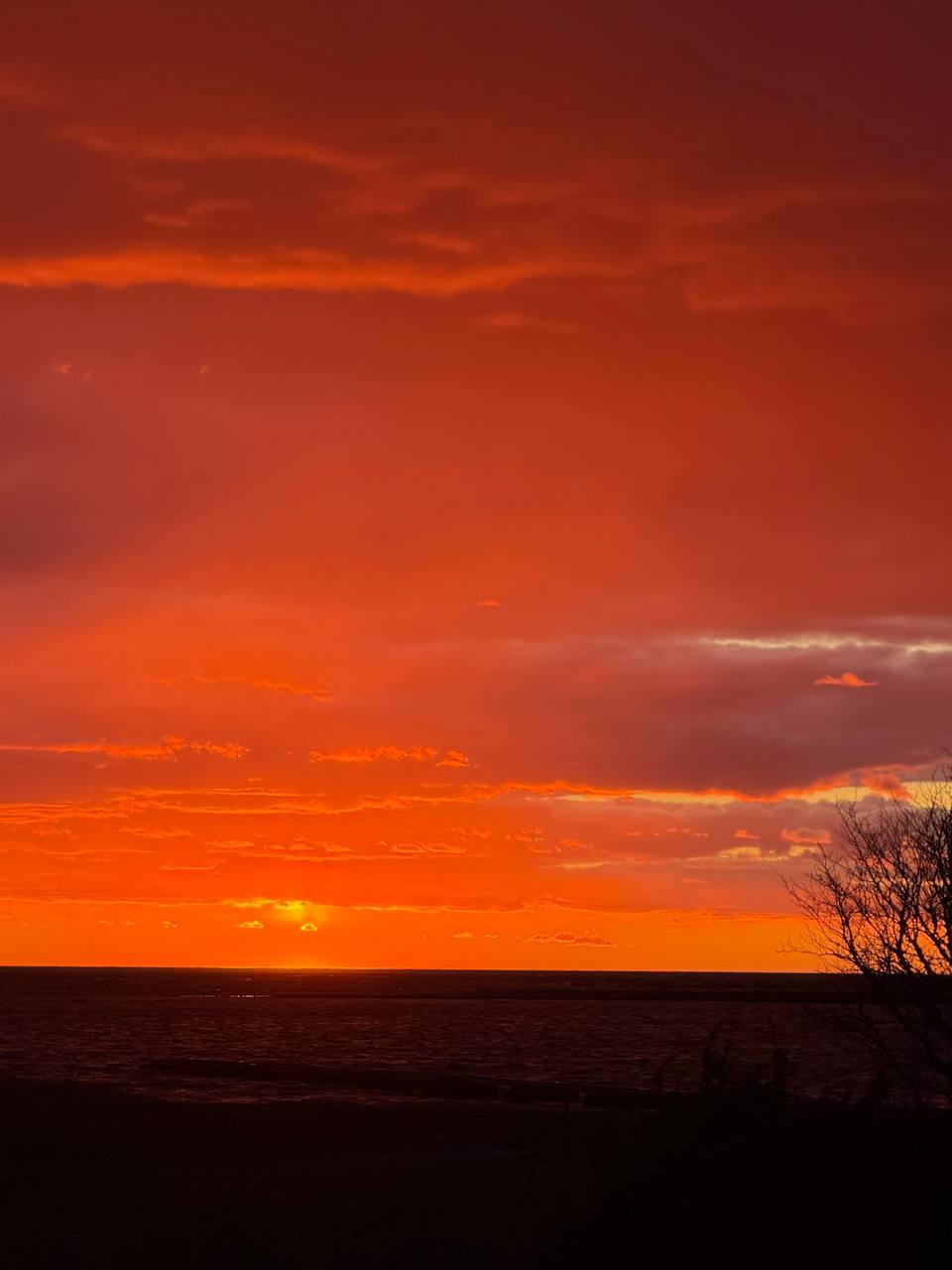
There is a notion that the best crops require long, hot summers. For hemp that isn't quite true. What shapes a flower is not the heat. It is the light, how much of it the plant manages to gather, and how that light is composed. And light is something the Nordics have plenty of, when measured the right way.
The season is short. The days are not.
Gotland sits at the 57th parallel. The growing season here is tight, frost releases late and returns early. But in the middle of that window the sun stays up for nearly eighteen hours straight. A plant on Gotland in June gets more hours of light per day than the same plant would receive far to the south, in the middle of their summer.
Hemp reads exactly that day length. The plant vegetates and builds structure during the long days, and starts flowering as the light begins to wane. The result of a Nordic season is therefore not a plant that has grown long and lazily, but one that has grown intensely and concentrated, a lot of light, a short time, dense development. We have written more about this in Hemp and the Nordic summer.
What the research actually shows
A study published in Scientific Reports 2025 (Zheng et al.) isolated the role of light in how hemp inflorescence develops. The researchers grew hemp under different light recipes and measured the difference.
- More red light during the growth phase produced 18% more effective branches and a 17.9% heavier inflorescence compared to the control, a larger, more branched plant to carry the flower on.
- UV-rich light during flowering raised the plant's cannabinoid content markedly, the same type of radiation that naturally increases the farther north you go and in clear, open landscape.
The study was done in a controlled LED environment, not out in a Gotland field, that has to be said plainly. But the principle it puts on the table is the same one that governs a Nordic season: the amount and quality of light determine how large and how fully developed the flower becomes. An open island position with long days and a high share of direct, clear light is, agronomically speaking, a good light recipe.
And we have measured it
This isn't just theory for us. We took the same hemp seed and grew it in two locations, on Gotland and in Italy, and sent the result for independent lab analysis (HPLC-UV).
| Growing location | CBDA (% w/w) | Method |
|---|---|---|
| Gotland, Sweden | 8.83 | Lab CoA, HPLC |
| Italy (reference) | 6.64 | HPLC-UV |
Same seed. Same genetics. About 33% more CBDA in the Gotland raw material, the only difference was the place it grew, and the light it stood in. (The difference between CBDA and CBD is explained in CBDA and CBD.)
The analysis is there to be seen. The lab report (CoA) for Premium CBD Hemp is openly published on the product page, and the full comparison is described in The Nordic climate advantage.
Why an open island landscape matters
Gotland is flat, wind-exposed and surrounded by sea. That means little shade, few tall obstacles and light reflected back from a bright landscape. The plant rarely stands in anyone's shadow. The combination of latitude and open position gives a light environment that is hard to recreate on an enclosed continental field. That is the environment the hemp on Gotland matures in, and that is the raw material Helsama refines.
From field to finished raw material
The hemp is grown on Gotland by the growers we buy our raw material from. Helsama then refines it further in Estonia, where the flower is dried and processed into a finished product. We don't claim to own the land or run the farm, our work begins when the harvest is in, and is about preserving what the short, bright season has already built into the plant.
The short Nordic summer window is not a limitation to compensate for. Measured in light, it is one of the more generous places a hemp plant can stand.
Source: Zheng, Q. et al. "Combination of red and UV-A light enhances hemp (Cannabis sativa L.) inflorescence yield and cannabinoid content." Scientific Reports 15, 28292 (2025). nature.com