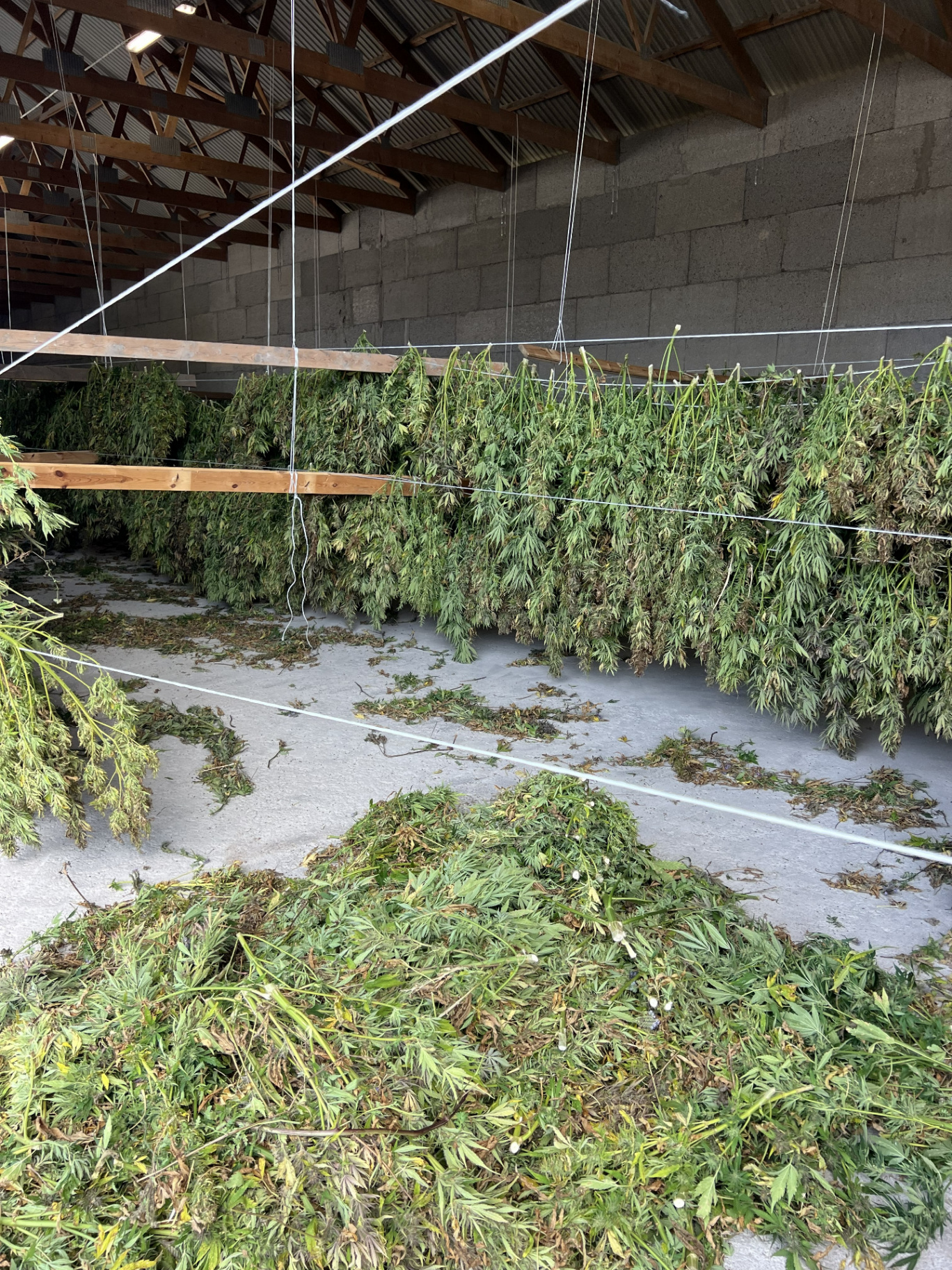
CBD has quickly become a well-known name. But despite growing demand, many still wonder: how is CBD actually produced? To understand the quality of a CBD product, you need to start at the beginning, in the soil where the hemp grows.
This guide walks through the entire CBD manufacturing process, from seed to finished product.
What Is CBD and Where Does It Come From?
CBD (cannabidiol) is one of over a hundred natural cannabinoids found in the hemp plant. Unlike THC, CBD is not psychoactive, meaning it does not cause a high. Swedish Public Health Agency
Hemp is also one of the most versatile plants we have. It:
- Grows quickly
- Requires no pesticides
- Is good for soil health
A particularly interesting property is that hemp functions as a bioaccumulator, it binds substances in the soil, including heavy metals and other pollutants, but also beneficial minerals. This makes it very effective for soil remediation, but also means that the growing location is crucial when hemp is intended for consumer products. USDA Research Publications
Transparency about origin is therefore an important quality indicator. Read more about the unique hemp from Scandinavia
Step 1: Growing Hemp
It all starts with the seed. Industrial hemp, the Finola variety, is commonly used for CBD production thanks to its low THC content.
Hemp is known for its rapid growth, from sowing to harvest takes just a few months. During the growing period, the plant develops the cannabinoids that are later extracted.
Historically, hemp was a natural part of everyday life. It was used to make:
- Rope
- Paper
- Textiles
- Soap
Read more about the history of hemp
Hemp fibres are very strong and durable, making them an excellent natural material for use in textiles, building materials, and other industrial products. Several studies indicate that hemp fibres are among the strongest natural fibres available, with mechanical properties making them particularly suitable for composites and sustainable material solutions. Furthermore, hemp can produce up to four times more fibre per hectare than trees and can be harvested annually, making it a more efficient and resource-saving alternative compared to wood-based fibres in many applications. Source
Step 2: Harvest and Raw Material
When the plants reach maturity, they are carefully harvested to preserve the cannabinoids. It is mainly the flowers that are used in CBD production as they contain the highest concentration of active compounds.
Some producers also offer raw hemp, which is the least processed form. Here, the plant's natural profile is preserved, including terpenes, flavonoids, and other plant compounds, which many appreciate for the so-called entourage effect.
In short: the less manipulation, the closer to nature's original composition. Read more about what premium CBD means
Step 3: Extraction: How CBD Is Obtained
After harvest, CBD is extracted from the plant material. There are several methods, but some of the most common are:
- CO₂ extraction, An advanced method where carbon dioxide under high pressure is used to separate the cannabinoids. It is popular because it can yield an end product free from solvent residues.
- Ethanol extraction, Here, food-grade alcohol is used to draw out the active compounds. The method is efficient and common in larger-scale production.
Step 4: From Extract to Finished CBD Product
Once the extract is ready, it is typically tested in a laboratory to verify cannabinoid levels and ensure the product is free from harmful substances.
The extract is then transformed into various types of products, such as:
- CBD oils
- Capsules
- Skincare
- Edible products
Why the Manufacturing Process Matters
Understanding how CBD is produced makes it easier to choose the right product. A reputable producer is transparent about:
- Where the hemp is grown
- How it is extracted
- How the product is tested
About Helsama’s Premium CBD Hampa: Unheated, milled raw hemp made from hemp grown on Gotland, the plant’s full spectrum in natural acid form, below 0.3% Δ9-THC. Under Swedish law, extracted full-spectrum oils are classed as narcotics (Supreme Court, 2019), and isolate isn’t full-spectrum. In a paired comparison, the Gotland material contained 8.83% CBDA against 6.64% for the same variety grown in Italy, a single observation, published by Helsama’s founder and not peer-reviewed. What accounts for the difference has not been isolated. Read more about our hemp.